The kitchen on my floor has become a battle zone. I don't know who the two forces are, but they've made the room a casualty.
The trash hasn't been taken out in weeks. The raw meat juices are starting to leak onto the floor. The hallway reeks of old frying oil and detritus.
The cleaning lady refuses to disinfect the counters because people won't put their stuff away.
There has been so much food stuffed down the drains that the sinks are now kaput.
Next to go should be the stovetops. Sometimes they are left on for hours or even an entire night. I hope this place doesn't catch on fire.
The freezers are full of raw meat without coverings, and the refrigerators hold mostly rotting food.
I'm waiting this out with a stockpile of food and dishes in my room and Febreze for whenever I have to enter the kitchen.
I love shared living.
Monday, November 24, 2014

Monday, November 17, 2014
13 rules for avoiding culture shock
Having moved 5 times within the last 7 years, and with Germany being my third country of residence, I am happy to say that I have once and for all found my way around culture shock. I've realized that this "culture shock" thing is less of a psychological step for moving places and more of an indication that you did not move correctly. But thankfully, now that I've figured it out, I can help you guys avoid it. You're welcome in advance.
- Choose your country wisely. The country you move to should be patriotic, democratic, and not obsessed with soccer.
- Once you choose your country, do not research it further. You do not want to get any (wrong) ideas about this new country being better.
- Slowly remove yourself from personal communication from your American friends and family. Let snapchats and instagrams replace going out for coffee and FB emoticons replace conversations. The more you do this, the less you will miss people when you are gone.
- Pack everything you own. You never know when you are going to need something, and just imagine the culture shock from needing an article you left at home! You should have at least 5 suitcases. Preferably 8.
- Buy 2 more suitcases and fill them with food, medicine, and toiletries. I recommend stocking up on shampoo, butter popcorn, Tylenol, Easy Mac, things with peanut butter in them, deodorant, and so on. The rule of thumb here is that it is always better to buy an extra suitcase than to forget something.
When you are there:
- Don't learn the language. When someone doesn't understand English, talk louder and more slowly to them. That should help raise their sub-par IQ to a level that can be of use to you.
- Don't learn to convert between pounds and kilograms or miles and kilometers. If anyone dares to use metric, they should be the ones to convert it for you.
- Attribute any differences between the culture there and your home culture to the lower level of civilization found outside the US. You may become accustomed to these differences, but remember: they are never correct.
- As a continuation of rule 3, do not make friends with anyone who is not American. Birds of a feather stick together.
- As a continuation of rule 4, move to an area with mostly expats. Make sure your house/apartment has a food disposal, a dryer, and a real bathroom and not one of those strange little just-toilet rooms. How are those door handles sanitary?
- Aim to make your daily life as similar to your American life as possible. Turn right on red? Go ahead. Walk across the street when the light isn't green? Be my guest. Whenever anyone tries to tell you that you can't do something, demand to speak to the manager. Follow rule 1 as you air your grievances.
- Buy the largest car available in your country. Install subwoofers with a 2-mile radius.
- Stick to fast food. I do not recommend restaurants from outside the USA- you never know what you're going to get, and a nasty surprise in your food may very well lead to culture shock. Unfortunately for us, McDonald's is not actually worldwide, but you still have some options. You're going to be eating a lot of chicken. Your choices in this golden arch-less countries are:
- Iceland- Taco Bell and KFC
- Bolivia- Subway
- Ghana- KFC
- Macedonia- Burger King
- Bermuda- KFC
- Zimbabwe- KFC (it got kicked out, but it has returned. You got lucky on that one.)
- North Korea- Nope. Do not move here.
And remember- the key to not missing America is believing that you never actually left.
Friday, November 7, 2014
You think you're too cool for school, but I have a newsflash for you, Walter Cronkite...you aren't
Over the past two weeks, I have realized that this master's degree is going to be difficult. When I applied to this program, I was secretly hoping the "physics" part of the name would be a bit less important than the "climate" part of the name. I don't think that is the case. But I know, I know, I should have expected it.
What I didn't expect is all the linear algebra that is going into this mess. I know physics requires math, but linear algebra? L'Algebra is one of my least favorite subjects of all time. I got myself through it by being excited about never having to use after the final. And now it comes back to haunt me with its tensors and its inner products and its matrices and its proofs.
What have I gotten myself into?
Culture-shock update, part 3:
What I didn't expect is all the linear algebra that is going into this mess. I know physics requires math, but linear algebra? L'Algebra is one of my least favorite subjects of all time. I got myself through it by being excited about never having to use after the final. And now it comes back to haunt me with its tensors and its inner products and its matrices and its proofs.
 |
| I wanted to be able to do this after graduation, but sadly that has proved impossible. |
Culture-shock update, part 3:
- Mayonnaise. Germans put mayonnaise on everything, I think. Actually, that's not true. If they have to eat something, they either have cheese on it or they put mayo on it. Sometimes both. There are so many times at the Mensa where I see a dish, try it, and realize the cream sauce is not a cream sauce but watered-down mayonnaise. Yesterday I was excited to find ranch dressing at the salad bar, but was it truly ranch? You can answer that for yourself.
- I think people are convinced that there are health benefits to opening windows and letting in nice, fresh, and often 7 degree C (45 degree F) air about once an hour. I am convinced that there are health benefits to not getting hypothermia.
- Understanding German spoken by Germans is difficult. Understanding German spoken by people with neither German nor American accents is the mental equivalent of an all-out sprint: you are ok and have a high level of self-confidence in the first 20 seconds, but then you realize you're exhausted and you still have a conversation to hold.
- On the flip side, why is it that I can talk to service people and have a decent and understandable conversation, but when I try to speak with someone in my dorm in German (usually about if the internet is working), they just respond with "Bitte? Bitte?" Am I really doing this language thing wrong?
Sunday, October 26, 2014
Last day of freedom
(which is not especially bad- my summer break has lasted about 5½ months. I can't complain.)
Uni starts tomorrow. It's been a busy month: I've packed up everything, moved to Kiel, got enrolled at the university, had my international orientation, met the other students in my degree, completed all my government stuff, and have just generally gotten myself settled. I begin my classes tomorrow with a class on the finite element method and my German class. I'm barely ready. I only just bought a notebook and some pens. The other people studying climate physics all seem super intelligent and have gone on awesome research expeditions or research trips abroad, and so I'm convinced that I'll have a lot of catching up to do over the next two years. They are really nice and friendly, so I think I will have a good time. It will just be very difficult, and I will realize very soon just how little I know about oceanography!
On the language side of things, my German is getting a bit better. My vocab is getting better from reading German signs everywhere, and I'm working on being more courageous in my speaking. Kiel is not an area where everyone can speak English. The college students all can, and so we usually speak English, but there are a lot of areas where that isn't a given. And, of course, those are the areas where the problems always occur ;) I speak in German when I am out and about, but as I rarely have conversations with complete strangers, the conversational practice still comes as a surprise. But it's getting there. I don't know how much the classes will help, but I am hoping that having 5 hours of pure German a week will help my brain transition from mentally translating everything to just understanding it.
As for an update of my culture-shock status:
Uni starts tomorrow. It's been a busy month: I've packed up everything, moved to Kiel, got enrolled at the university, had my international orientation, met the other students in my degree, completed all my government stuff, and have just generally gotten myself settled. I begin my classes tomorrow with a class on the finite element method and my German class. I'm barely ready. I only just bought a notebook and some pens. The other people studying climate physics all seem super intelligent and have gone on awesome research expeditions or research trips abroad, and so I'm convinced that I'll have a lot of catching up to do over the next two years. They are really nice and friendly, so I think I will have a good time. It will just be very difficult, and I will realize very soon just how little I know about oceanography!
On the language side of things, my German is getting a bit better. My vocab is getting better from reading German signs everywhere, and I'm working on being more courageous in my speaking. Kiel is not an area where everyone can speak English. The college students all can, and so we usually speak English, but there are a lot of areas where that isn't a given. And, of course, those are the areas where the problems always occur ;) I speak in German when I am out and about, but as I rarely have conversations with complete strangers, the conversational practice still comes as a surprise. But it's getting there. I don't know how much the classes will help, but I am hoping that having 5 hours of pure German a week will help my brain transition from mentally translating everything to just understanding it.
As for an update of my culture-shock status:
- Kiel is rainy. A day is a good day if there is no rain. A day isn't a bad day until the rain is torrential. And drizzle is not rain- it's a part of life.
- Getting used to the rain is actually not that difficult. The most difficult aspect of it is having to ride my bike in it. I have a rain jacket which works great, but my pants always become two-toned.
- Puffy jackets are a thing here, and old 80s dance tunes and Phil Collins get played on the radio a lot. I am not sure which decade Schleswig-Holstein thinks we're in. I feel like I'm in the poorly remade German sequel to Hot Tub Time Machine.
- Sweet potatoes here are EXPENSIVE. So is peanut butter. And Tabasco.
- Speaking of Tabasco, anything "spicy" seems to have sugar as the second ingredient. Salsa? Water, then sugar, then tomatoes. The hot sauce I found here? Water, then HFCS. Truly terrible. It's almost as if Germans don't like spicy food.
- Kielers have either not seen cowboy boots before, or they have only seen them in the movies. I only make this assumption because whenever I wear them out (why wouldn't I? They're pretty much waterproof), I get lots of stares.
- Doctor office etiquette here is...very polite. You must tell everyone hello when you walk into the waiting room, and then goodbye when you leave it. However, you must never ever speak to any of the other people waiting during the rest of the time you're there.
- The computers are all running Windows Server 2003 and can't read a USB-stick. Am I actually studying at a university?
Sunday, September 28, 2014
The end of an era
When I decided to move to Germany for two years, I decided that I would try to take advantage of the opportunities the country would present me. I'm working towards learning more of the language, saving up money to see more of the country than just Kiel and Berlin, and learning the more minute details of German culture. I've had to learn not to cross when the Ampelmann is red (even though "rote Gänger leben länger"), I stay on the right side of escalators when I don't care to walk up them, and I've gained an appreciation for Rote Grütze. The last one is delicious, and it's only 40 cents at Aldi. What a horrible combination health-wise! But I digress.
The one thing that's the most difficult about this decision is the food. Obviously, Germany is a country full of different types of meat dishes, and as a vegetarian this poses some health problems. Right now, the vegetarian life is pretty easy: Berlin has enough dirty hipsters in it (yes, dirty) to have a wide selection of vegetarian food. But in a few weeks, I may not have such a luxury. As a precautionary measure (and also because I think it's adventurous and am trying to do something new) (and also because there is an Oktoberfest party coming up next week in Wolfsburg and I want to be prepared) I have decided to become a non-vegetarian. Wait, no, an omnivore. After not needing to use that word for 6 years, it's not exactly on the tip of my tongue.
I've said this before, but it was always more of a stunt than anything: a bit of chicken here, a nibble of bacon a year later, etc. etc. The "literature" on quitting vegetarianism usually recommends having a small pieces of meat incorporated in food, but I always thought it didn't help. I tried to forget that there was meat, only heightening the psychological hurdle. This time around, I decided to do the exact opposite. We went to a street food festival, walked up to stall that was literally carving pieces out of a (obviously dead and cooked) pig, and ordered a plate of Backschwein. When you eat Backschwein, there is no kidding yourself. You must acknowledge that this food came from a living animal. Do a google image search if you don't believe me.
Anyway, I bucked up and tried it. It was delicious. Salty, tender, just yum. And with the acidity of the sauerkraut and the spiciness of the mustard...and there was this new taste! Umami! Vegetarian food only rarely has umami! I think I equated that taste with saltiness, but no, it's so much different. So much better.
You know how you have muscle memory? I'm now convinced that there's such thing as sensory memory too. Even after 6 years, that first taste of pork felt very...familiar. As if my mouth was being revisited by a friend from old Christmases and Thanksgivings. I didn't end up eating all of it (newsflash: protein is really filling!), but that's ok. The 6-year reign of vegetarianism is over. I even ate a burget on Saturday...in 2 1/2 minutes. I regretted that choice, but only the latter one. That might have been too quick. But it was super juicy and I hate soggy bread. What a first-world problem.
I am planning on taking this transition slowly- I'm not yet ready for deutsche Würste, and I think I'll never be ready for the Golden Arches or non-vegetarian airplane meals, but I'm happy to know that I can go to any city and eat without a care...as long as they're up-to-date, health-code wise, that is :). I may be trying new things, but I'm not ready to be stupid about it just yet!
The one thing that's the most difficult about this decision is the food. Obviously, Germany is a country full of different types of meat dishes, and as a vegetarian this poses some health problems. Right now, the vegetarian life is pretty easy: Berlin has enough dirty hipsters in it (yes, dirty) to have a wide selection of vegetarian food. But in a few weeks, I may not have such a luxury. As a precautionary measure (and also because I think it's adventurous and am trying to do something new) (and also because there is an Oktoberfest party coming up next week in Wolfsburg and I want to be prepared) I have decided to become a non-vegetarian. Wait, no, an omnivore. After not needing to use that word for 6 years, it's not exactly on the tip of my tongue.
I've said this before, but it was always more of a stunt than anything: a bit of chicken here, a nibble of bacon a year later, etc. etc. The "literature" on quitting vegetarianism usually recommends having a small pieces of meat incorporated in food, but I always thought it didn't help. I tried to forget that there was meat, only heightening the psychological hurdle. This time around, I decided to do the exact opposite. We went to a street food festival, walked up to stall that was literally carving pieces out of a (obviously dead and cooked) pig, and ordered a plate of Backschwein. When you eat Backschwein, there is no kidding yourself. You must acknowledge that this food came from a living animal. Do a google image search if you don't believe me.
 |
| Photo by Christoph. He was pretty proud. |
You know how you have muscle memory? I'm now convinced that there's such thing as sensory memory too. Even after 6 years, that first taste of pork felt very...familiar. As if my mouth was being revisited by a friend from old Christmases and Thanksgivings. I didn't end up eating all of it (newsflash: protein is really filling!), but that's ok. The 6-year reign of vegetarianism is over. I even ate a burget on Saturday...in 2 1/2 minutes. I regretted that choice, but only the latter one. That might have been too quick. But it was super juicy and I hate soggy bread. What a first-world problem.
I am planning on taking this transition slowly- I'm not yet ready for deutsche Würste, and I think I'll never be ready for the Golden Arches or non-vegetarian airplane meals, but I'm happy to know that I can go to any city and eat without a care...as long as they're up-to-date, health-code wise, that is :). I may be trying new things, but I'm not ready to be stupid about it just yet!
Wednesday, September 24, 2014
No longer a tourist
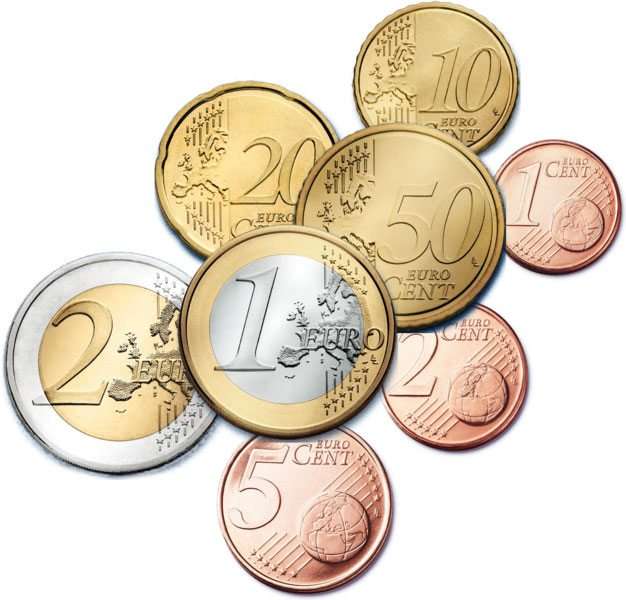 I am having some struggles with things that weren't so difficult before. Case in point: coins. Apparently, the Eurozone decided to create as many coins as possible when creating their money. There are 8 coins in total, and they look so similar, especially the 1 cent/2 cent and 10 cent/20 cent coins. After leaving Australia, I had a year's worth of coin-counting under my belt, but after my last year in the USA I automatically reach for plastic. I guess it's just another subtlety of culture or whatever.
But anyway, Germans are known to be ruthless (read: rude) while waiting in line to pay for their things. You are expected to bag your own groceries and provide exact change for the purchase in, oh, about 10 seconds. They will roll their eyes and sigh exasperated sighs if you decide to pay by debit card because it takes too long. I'm not really in the mood to tick off any natives just yet, so in my attempt to avoid getting chewed out by some angry Deutscher, I just hand the cashier the biggest bill I have on hand and then fumble with the change. The pennies are piling up in the inadequately small coin pocket of my wallet.
Also, last year my German was at the point where I would ask a question in German and get an answer in English. Now, apparently, the Germans have decided that I am fluent enough to get rapid-fire responses and follow-up questions. This is not the case. I work really, really hard at constructing my questions or statements before going up to someone. I make sure I know all the right words, figure out some circumlocution if I don't, fit it all in a nice grammatically correct package, and then go for it. It usually takes 5 seconds of thinking, but then my brain freezes once I hear German back. I forget the entire language, my eyes get wide, and I freeze. I'm a deer in linguistic headlights.
The biggest difference, though, is that I am no longer on vacation. I'm not here to "take a break" from American life. I feel very unprepared to start things here. In three weeks, I will be on my own in some little town up north, starting classes in an area in which I barely have any experience. I keep on having to remind myself that this is not Australia. I don't have the Study Abroad offices of two universities making sure my visa, paperwork, and classes are in order. I don't have a scholarship; I will need to find a way to live on a tight budget while still having some semblance of a life. And everything that was a bit frustrating in Australia -- finding a gym, figuring out which foods are carried at the grocery stores, buying bikes off Craigslist, scheduling doctors' appointments -- might become much bigger ordeals. There hasn't been a culture shock for me yet in this little honeymoon phase in Berlin, but I know. It will come.
But I've gone through it once, and I can go through it again. My memory is not good enough to know if this whole feeling of unpreparedness is customary or if I've just forgotten something really important.
Monday, August 25, 2014
An Introduction to Kiel
I only have about 9 days until I leave the States for Germany. Which is really weird, because I know barely anything about the city to which I am moving. When I first left for Adelaide, I had some idea of what life would be like there. To be fair, though, it was all based off of some angsty letter a previous study-abroad student wrote about how expensive shampoo was in Australia (I mean, really, she recommended that you use half your suitcase for cosmetics. Really? That's a bit much).
So, after about an hour of internet searching, I have found that Kiel, Germany...
So, after about an hour of internet searching, I have found that Kiel, Germany...
- ...has a population of about 242,000, making it the largest city in Schleswig-Holstein (I didn't even need to spell-check that, how is that for progress?!) and a good bit larger than College Station/Bryan (97,000/78,000) or Concord (82,000).
- ...is very far north and very cold and wet. There is no dry season in Kiel, as opposed to College Station where it would not rain for months. The hottest temperature ever recorded was 95 degrees, while the coldest was -2 (which, admittedly, is not that cold). However, about 20% of the year will be spent below freezing, and 65% of the year will be spent in the rain. This is no beach paradise.
- ...has a football team. Two, actually: Holstein Kiel is the Fußball league (3. Liga, so there won't be any big name teams playing), and the Kiel Baltic Hurricanes are the American football team. Of course, those games won't be anything like the NFL games over here, but football is football. Other than football, the city is known for its handball team, which I didn't realize was even a team sport until I saw it on Wikipedia.
- ...is the location of the biggest sailing event in the world. The Kieler Woche runs during the last complete week in June and is mostly composed of drunk sailors, drunk tourists, drunk Kielers, and some sailing. This is unfortunate because exams will usually start in the few weeks after Kieler Woche.
- ...is closer to Copenhagen than its own country's capital.
- ...is dead on Sundays. That will take some getting used to. Australia is similar but, if I had to take a guess, probably more Americanized.
Wednesday, June 25, 2014
I couldn't sleep last night.
It might have been because I had fallen asleep at around 8 and then woken up to finish the dishes, but I tossed and turned so much last night. I texted Chris a few minutes before midnight: "I have a feeling tomorrow is the day." And I kept checking my phone - 1 am, 3 am, 5 am - hoping for something from the lady who manages the applications. And nothing.
But when I woke up today (at 7 am, which is extremely early for me when I'm in summer mode), there was an email! Which made me excited for two reasons:
What now? I need to start preparing. There are quite a few things to do:
Who am I kidding, I'll always have time for trash TV.
But when I woke up today (at 7 am, which is extremely early for me when I'm in summer mode), there was an email! Which made me excited for two reasons:
- I totally called it.
- I got accepted into GEOMAR's Climate Physics program!
What now? I need to start preparing. There are quite a few things to do:
- I'd love to get my foot fixed before going anywhere with a lot of walking.
- My Texas/North Carolina wardrobe will obviously not work. Kiel is located at 54° N, which runs through Canada and Alaska in the Western Hemisphere (side note: it's far enough north to see the Northern Lights! Brrrrr). So that'll need to be updated, and hopefully before I leave as American clothes are a lot cheaper.
- I need to book a flight to Germany. One-way flights are expensive so that'll take some trickery.
- I'd like to find a place to live before uni starts.
- I should probably brush up on my German. There are not a lot of English-speaking expats there.
- For the sake of my family, I'll try to annoy them as much as I can over the next two-ish months so that they can get sick of me before I have to leave...
- ...and then say goodbye to everyone.
Who am I kidding, I'll always have time for trash TV.
Subscribe to:
Posts (Atom)